How to Choose Agricultural Equipment Shock Absorbers? Why Hydraulic Shock Absorbers Remain the Most Common OEM Choice

Every Day's Work Begins on a Bumpy Farm Track

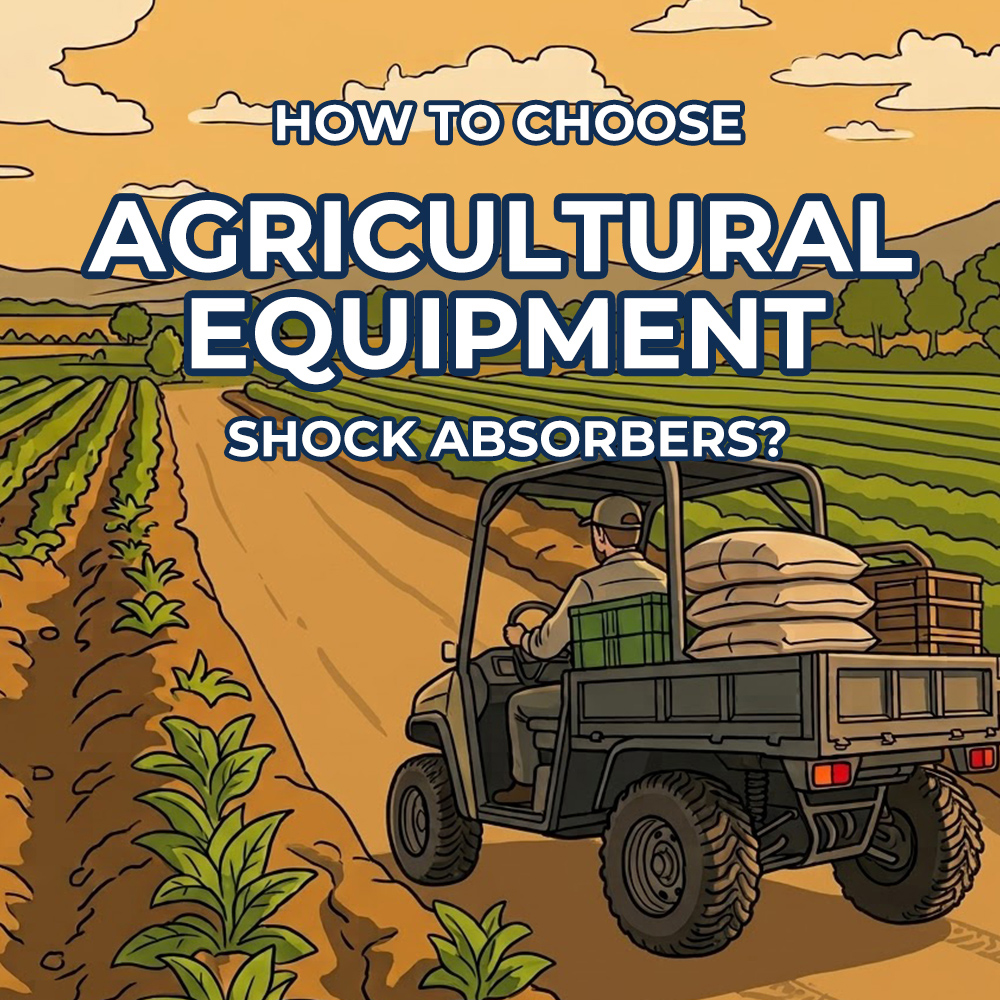
At 5:00 AM, before the sun has fully risen, an agricultural utility vehicle drives into the fields. Loaded with fertilizers, tools, and harvests, it makes trip after trip through mud, gravel, and uneven ridges. For the driver, this is just a daily routine; but for the vehicle, every vibration and pothole impact tests the durability of the suspension system.

If shock absorber performance is insufficient, it does more than just lower ride comfort— can accelerate wear on body components, reduce tire grip, and even compromise stability and safety during long working hours. Therefore, for many agricultural machinery brands, choosing a reliable, durable, and easy-to-maintain shock absorber is often much more critical than pursuing complex, high-performance designs.

 

Why Do Many Agricultural Machines Still Choose Hydraulic Shock Absorbers?

In the world of suspension products, hydraulic shock absorbers remain widely used in agricultural machinery, material handling equipment, specialized vehicles, and certain commercial vehicles. The reason isn't because they are "cheap," but because they strike an ideal balance between durability, ease of maintenance, and overall cost effectiveness. For agricultural equipment that operates for long hours every day, stability and reliability are far more essential than chasing extreme performance limiters.

How Hydraulic Shock Absorbers Work

Hydraulic shock absorbers primarily utilize the damping force generated by hydraulic oil flowing inside the piston to absorb impact energy from the road. When wheels encounter bumpy terrain, the shock absorber channels the fluid through precisely engineered oil pathways, converting the kinetic energy of the impact into thermal energy, which gradually dissipates to keep the vehicle body stable. Compared to high-end gas charged or piggyback reservoir suspension systems, the structure of a hydraulic shock absorber is relatively straightforward, offering a more mature and dependable engineering foundation.

Why Do OEM Clients Still Prefer Hydraulic Shock Absorbers?

From an OEM development perspective, different industries have distinct requirements for suspension systems. For agricultural machinery, handling equipment, or special-purpose vehicles, brands typically prioritize whether a product can operate stably over long periods rather than extreme handling performance.

Consequently, hydraulic shock absorbers remain the mainstream choice for many OEM projects due to the following advantages:

1. Simple Structure, High Reliability

The component makeup of a hydraulic shock absorber is relatively simple. Following decades of technological evolution, the design is highly mature and stable. For equipment requiring continuous, long-term operation, fewer complex structures translate directly to higher reliability.

2. Excellent Durability, Built for Long Working Hours

Agricultural machinery frequently faces harsh operating environments filled with mud, gravel, moisture, high temperatures, and intense vibrations. A mature hydraulic shock absorber design delivers consistent damping performance, helping to mitigate the strain that continuous vibration places on the vehicle body and its components.

3. Superior Cost Control Advantages

For OEM brands, product development is not just about performance; it must also balance overall cost. Due to mature manufacturing processes and relatively simple component structures, hydraulic shock absorbers deliver competitive cost-efficiency while maintaining excellent performance, making them ideal for mass production and diverse market demands.

4. Easy Maintenance, Long Service Life

Agricultural equipment often requires extended outdoor operation. If maintenance procedures are overly complex, downtime costs will inevitably rise. Because hydraulic shock absorbers feature a mature structure and are relatively straightforward to service, they reduce future maintenance burdens, explaining their widespread adoption by agricultural and industrial equipment brands.

Comparison Chart

Comparison Metrics Hydraulic Shock Absorbers Gas Charged / Piggyback Reservoir Shock Absorbers
Applicable Industries Agricultural machinery, handling equipment, commercial vehicles Heavy motorcycles, racing, off-road vehicles
Structural Complexity ★★☆☆☆ ★★★★★
Durability ★★★★★ ★★★★☆
Ease of Maintenance ★★★★★ ★★★☆☆
Cost Efficiency ★★★★★ ★★☆☆☆
Level of Customization Configurable by demand Highly customizable
Long-Term Operation Highly suitable Dependent on operating environment

Reminder: There is no absolute winner when choosing a shock absorber type. Engineering and model selection should always be based on the vehicle type, load capacity, working environment, and brand positioning.

OEM & ODM Development: Not Just Manufacturing, But Co-Designing

Different brands require different performance profiles from their shock absorbers. For instance:

Agricultural utility vehicles need to withstand high payloads and prolonged vibrations.

Farming machinery prioritizes durability and low maintenance costs.

Special-purpose vehicles may require a complete redesign based on installation space, stroke length, and damping characteristics.

Therefore, during the OEM/ODM development process, engineering teams typically plan appropriate shock absorber specifications tailored to the vehicle’s purpose, load conditions, installation dimensions, and target market—rather than simply applying an off-the-shelf product.

A Good Shock Absorber Does More Than Absorb Vibrations; It Impacts Long-Term Equipment Reliability

For agricultural machinery working daily in rugged environments, the value of a shock absorber goes far beyond improving comfort. It simultaneously impacts vehicle stability, component lifespan, maintenance costs, and overall operational efficiency.

With their mature structural design, exceptional durability, high cost-performance ratio, and convenient maintenance features, hydraulic shock absorbers remain a vital choice for numerous agricultural machinery OEM and ODM projects today. For brand owners, selecting the right shock absorber is not just about choosing a component; it is a critical decision that balances product reliability with market competitiveness.

Frequently Asked Questions (FAQ)

Q1: What types of vehicles are hydraulic shock absorbers suitable for?

A: Hydraulic shock absorbers are widely used in agricultural machinery, material handling equipment, commercial vehicles, certain motorcycles, and special-purpose vehicles. They are particularly suited for scenarios where durability, cost-effectiveness, and ease of maintenance are highly valued.

Q2: Are hydraulic shock absorbers inherently inferior to gas charged shock absorbers?

A: Not necessarily. The two are engineered with different design objectives. Hydraulic shock absorbers excel in durability, reliability, maintenance convenience, and cost-efficiency. In contrast, gas charged or piggyback reservoir shock absorbers are better suited for applications pursuing high-performance handling or intense, aggressive operating environments.

Q3: Can OEM and ODM shock absorbers be customized based on specific requirements?

A: Yes. Comprehensive customized development can be tailored to brand requirements—ranging from installation dimensions, damping settings, and spring rates to stroke design and external configurations.

Q4: Why does agricultural machinery place such a high premium on shock absorber durability?

A: Agricultural machinery typically operates for long hours in mud, gravel, and uneven terrain. If a shock absorber lacks durability, it can significantly increase repair frequency, equipment downtime, and overall operational costs.