How Dangerous is a Failing Front Suspension? Many Only Realize It’s Serious When the Ride Starts Feeling "Off"

"It's just a tiny oil leak, I can still ride it, right?"

Alex rides his motorcycle to work every day. The round trip is about 25 kilometers. He takes the exact same route daily, passing the same traffic lights, speed bumps, and manhole covers.

One day, he noticed the front end felt a bit harsher than usual when hitting potholes.

A few days later, he felt the front end diving excessively every time he braked.

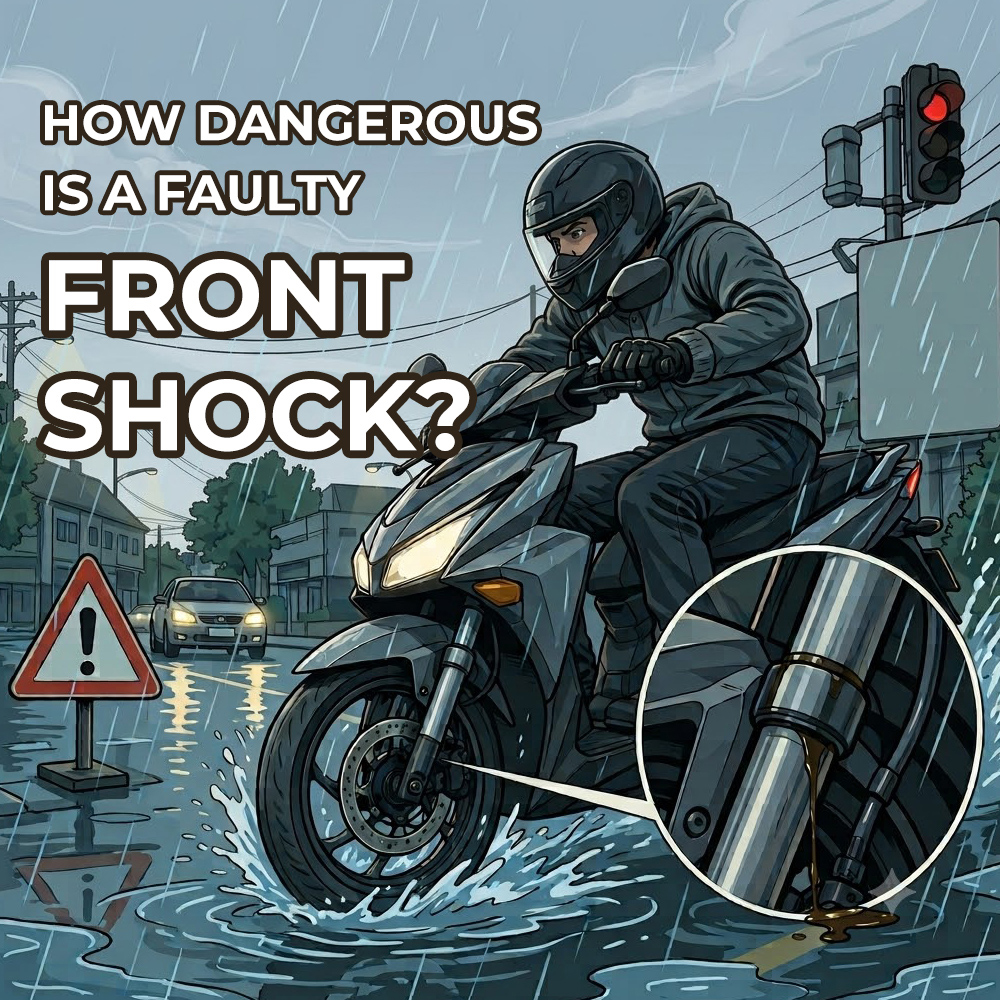
A few more days passed. While waiting at a red light, he looked down and spotted a dark, oily ring coated around the inner tube of his front fork.

His friend told him:

"It's just a leaky front fork, you can still ride."

So, he kept riding for another month.

Until one rainy day, as he leaned into a turn and hit a small pothole, the front wheel lost traction for a split second. The handlebars wobbled violently, and he came incredibly close to wiping out.

At that exact moment, he finally realized:

A front shock absorber isn't just there to give you a comfortable ride; it is quietly protecting your life.

Front suspension safety inspection

Why Is the Front Suspension So Important?

Many riders think suspension is purely for comfort. In reality, its primary job is to keep the front tire firmly planted on the ground.

Whether you are hitting potholes, speeding over speed bumps, crossing asphalt seams, or slamming on the brakes, your front forks work constantly to absorb these impacts and maintain maximum tire grip.

If your front suspension fails, the front wheel will bounce, your braking distance will increase significantly, and you will lose stability when cornering.

A high-quality front fork isn't just a comfort upgrade—it is an essential safety feature.

Why Do Most Motorcycles Use Conventional Front Forks?

If you observe the motorcycles on the street, you will notice that whether they are:

125cc commuter bikes

150cc street bikes

Delivery bikes

Scooters

Student-owned motorcycles

The vast majority are equipped with conventional front forks (telescopic front forks).

The reason is simple: they are durable, reliable, and incredibly well-suited for daily riders.

Why Have Conventional Front Forks Remained the Market Standard for Decades?

1. Simple Structure Means Greater Durability

Great design is often simple. Conventional front forks utilize a telescopic structure to absorb road vibrations. With fewer moving parts and a highly mature design, they have an exceptionally low failure rate—making them the most reliable partner for daily commuters.

2. Easy Maintenance Without Breaking the Bank

Every mechanical part requires maintenance over time, and front forks are no exception. However, their greatest advantage is parts availability. Most repair shops can easily service them, swap out fork oil, or replace oil seals. This keeps maintenance costs highly affordable and ensures you are never stuck waiting for rare parts.

3. More Critical for Potholes Than You Think

Most people only think about their suspension when hitting major potholes. But the reality is that your forks are working every single second on the road. Manhole covers, expansion joints, asphalt patches, and speed bumps—without a proper front fork to absorb these micro-vibrations, they would transfer straight to your hands, causing fatigue and reducing riding stability.

4. Safer Braking, Confident Cornering

A well-performing front fork keeps the front end stable and planted. It prevents the nose of the bike from diving abruptly during braking and eliminates wobbling during cornering. Many riders find that after upgrading their front forks, the biggest improvement isn't speed—it's that the bike feels incredibly smooth and easy to handle.

5. Highly Appreciated by High-Mileage Riders

If you only ride occasionally, you might not notice how crucial the front fork is. But if you are:

A daily commuter

A delivery rider

A field sales representative

A long-distance tourer

Riding more than 100 kilometers a day, you will immediately feel the difference. A stable front fork drastically reduces hand fatigue, making long hours on the road significantly more comfortable.

Signs of a Failing Front Suspension

Many riders wait until a major failure before inspecting their suspension. Keep an eye out for these warning signs to catch issues early:

Symptom Potential Cause
Front fork oil leaks Worn or damaged oil seals
Bouncing excessively over potholes Loss of damping effect (blown shocks)
Severe nose-diving when braking Degraded fork performance / soft springs
Instability during cornering Insufficient damping or worn internal components
Strange noises from the front wheel Worn internal fork components

Ignoring these symptoms not only ruins your riding comfort but also severely compromises front-wheel grip and braking stability.

FORSA Conventional Front Forks: Peace of Mind for Your Daily Ride

For daily riders, the best front fork doesn't have to be the most expensive; it just needs to be the one you can rely on day in and day out.

FORSA Conventional Front Forks utilize a highly mature and dependable telescopic structure, offering:

✔ Stable structure: Exceptional durability and reliability.

✔ Natural shock absorption: Smooth dampening for enhanced handling feedback.

✔ Easy maintenance: Simple servicing with highly accessible replacement parts.

✔ Cost-effective upkeep: Lower maintenance and repair costs.

✔ Built for daily use: Perfect for long-distance, everyday riding.

Our products are widely utilized in:

Street bikes

Commuter bikes

125cc to 250cc motorcycles

Scooters

Entry-level training bikes

Delivery fleets

Daily city runabouts

We also offer fully customized solutions tailored to OEM and ODM brand requirements, including custom damping settings, dimensions, and product configurations, helping global brands build front suspension systems that meet their local market demands.

Frequently Asked Questions (FAQ)

Q1: How often should I inspect my front suspension?

We recommend a thorough inspection every 10,000 to 20,000 kilometers. If you frequently ride on rough roads, carry heavy loads, or ride long distances, you should inspect them sooner. If you notice any oil leaks, unusual noises, or changes in handling, seek professional servicing immediately.

Q2: Can I keep riding if my front fork is leaking oil?

While you can ride a very short distance to a service shop, we strongly advise against continued daily use. Leaking oil causes a loss of damping force, which severely impacts braking, cornering, and overall stability—posing a massive hazard, especially on wet roads.

Q3: What types of motorcycles are conventional front forks best suited for?

Conventional front forks are the most mature, reliable, and widely used front suspension systems. They are perfect for street bikes, commuter motorcycles, scooters, 125cc to 250cc models, delivery bikes, and daily city rides.

Q4: Does FORSA offer custom OEM/ODM front fork development?

Yes, we do. FORSA provides comprehensive customization services tailored to your brand's specific needs, including adjustments to dimensions, damping characteristics, spring rates, and aesthetic finishes, helping you create the perfect front fork for your target market.